Compact vision station
Mount the camera and lighting in a guarded frame around a stable section of the line.
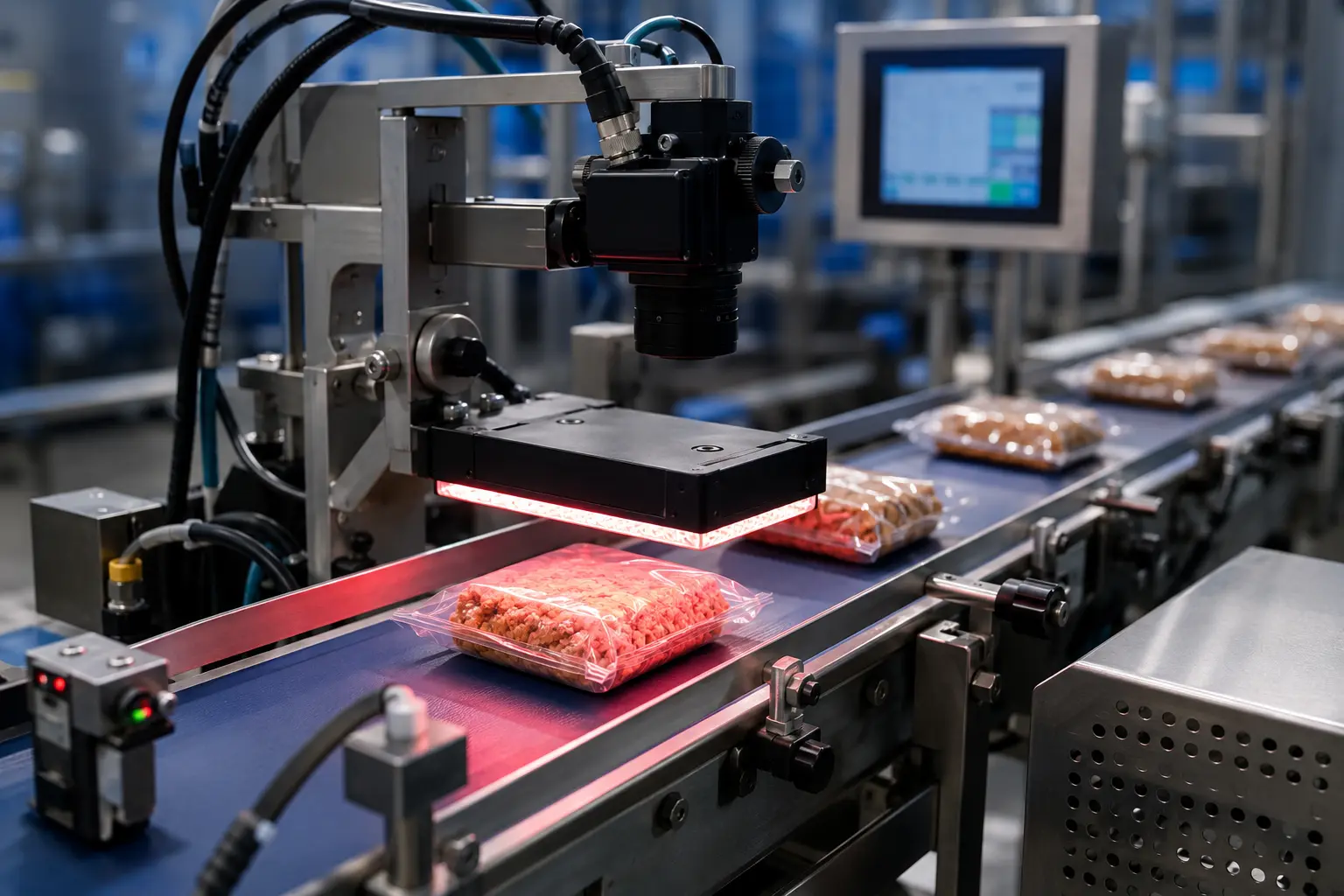
Add automated date, batch and lot code checks without replacing the complete packaging line. We assess product handling, space, controls and rejection as one retrofit project.
In many cases, yes. A retrofit can add a trigger, camera, lens, controlled lighting, processor, operator interface and reject connection around an existing conveyor. Where the line cannot provide stable presentation or safe rejection, a short standalone conveyor module can create a controlled inspection zone.
The feasibility decision depends on space, line speed, product spacing, code visibility, controls, guarding and the required response to a failed pack.
A good retrofit does not obstruct operators, destabilise products or create inaccessible maintenance points. Survey work maps the inspection field of view, cable routes, controls interfaces, washdown or environmental requirements and the distance available for tracking a failed product.
Mount the camera and lighting in a guarded frame around a stable section of the line.
Create repeatable product handling where the existing conveyor cannot support reliable imaging.
Exchange triggers, job data, pass/fail states, alarms and interlocks with the line controls.
Use an existing suitable reject or add a device with the tracking and confirmation required.
Early product trials and a measured site survey reduce surprises during installation and commissioning.
Test real packs, code positions, print quality and maximum speed under representative conditions.
Measure footprint, presentation, spacing, utilities, controls, guarding and reject distance.
Commission recipes and interfaces, then test known failures, reject timing and recovery states.
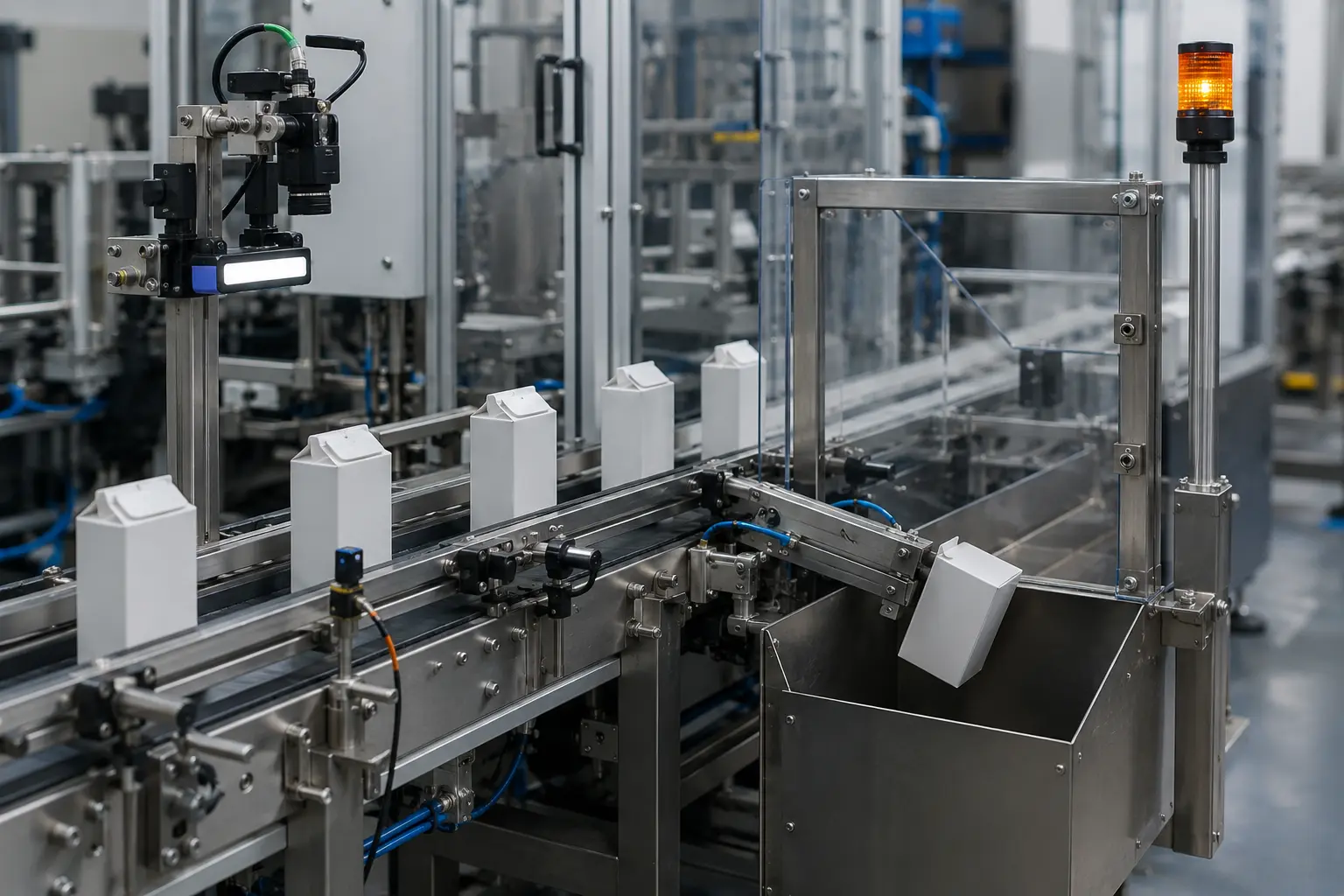
Photographs and a line-speed figure are a useful start, but reliable planning needs the worst-case product and process conditions. The critical constraint is often product handling or rejection rather than the vision tool itself.
Use these related pages to define the character method, physical print check and failed-product response.
Answers are based on typical industrial machine-vision projects; final performance and scope follow representative trials and the measured line conditions.
Usually not. The vision equipment can often be installed around a stable existing section, or a short standalone conveyor can be added where presentation, space or rejection cannot be controlled on the current line.
Possibly. The device must suit the product, speed, failure risk and available tracking distance. Its feedback, recovery behaviour and access control should also meet the project requirements.
That depends on the mechanical and electrical scope, access and validation requirements. Pre-build, offline trials and agreed interfaces can reduce on-line work, but the final programme follows the measured site survey.
Yes, when the optics, handling and field of view support the complete range. Product recipes can change expected code values, regions and inspection tolerances under controlled access.
Send the product range, code samples, speed, layout and controls information. We will identify the decisions needed before a retrofit quotation.