Provide the approved product job
Identify who approves the required content and how the active recipe or production value reaches inspection. Keep product rules and authorisation separate from a camera reading the printer output.
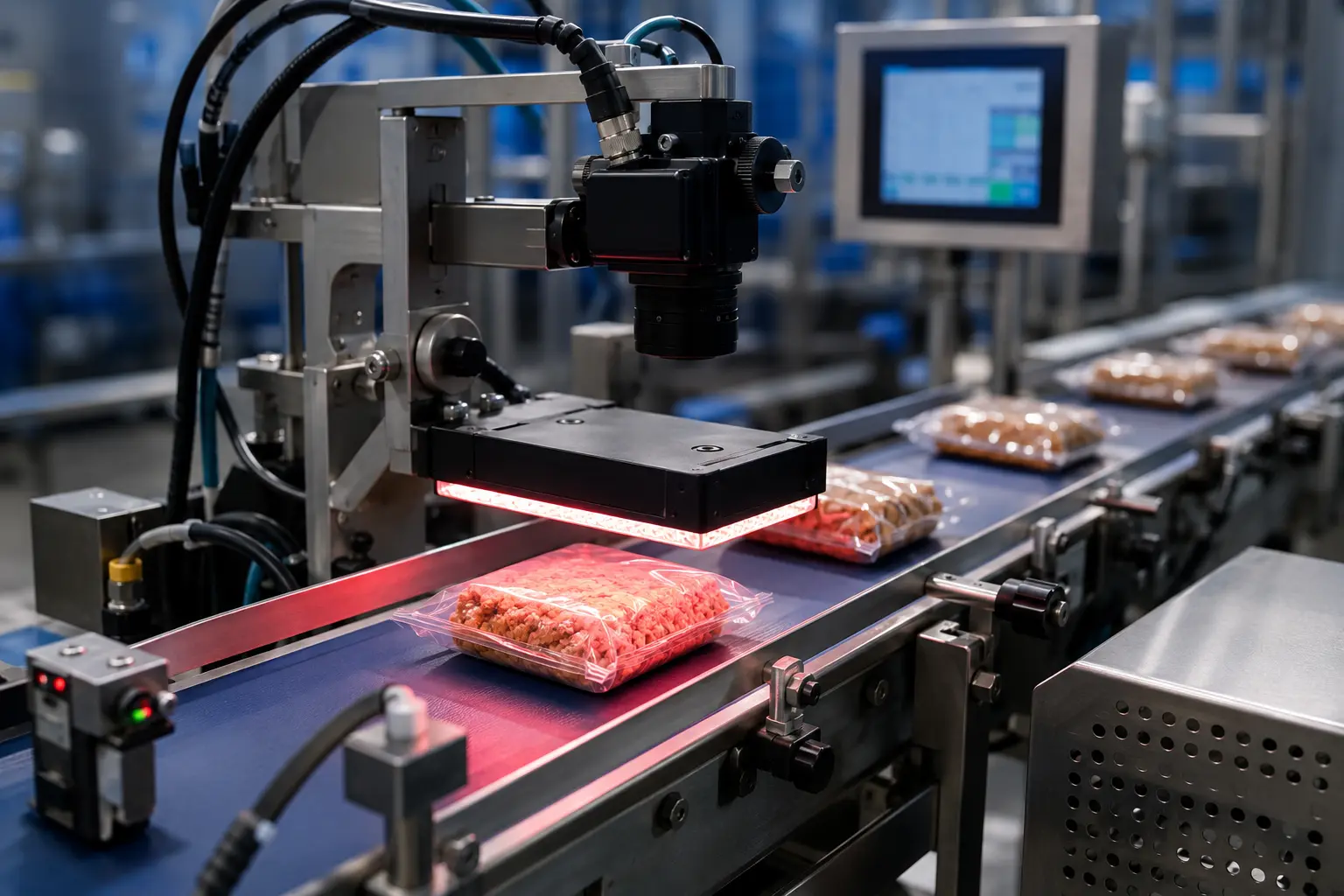
Inspect best-before dates, use-by dates, batch and lot information across trays, pouches, cartons, jars, bottles and sleeves at production speed.
Agree the approved date, batch and format for the product, then challenge whether the physical pack carries that expected information in a readable form. Test the inspection decision with the actual pack presentation and failed-pack response. A camera comparison does not set the product shelf-life rule or establish complete food-label compliance.
Identify who approves the required content and how the active recipe or production value reaches inspection. Keep product rules and authorisation separate from a camera reading the printer output.
Include representative acceptable, marginal and failed print on the intended substrate and pack faces. Separate missing or unreadable print from a readable but incorrect date or batch.
Include old-job and new-job boundary packs, pauses and restart conditions. Define the job for packs already in transit and retain the agreed tracking, removal confirmation and result records.
For the next step, plan expiry-date content checks and define the failed-pack response.
Food and beverage lines combine variable print with frequent changeovers, reflective films, wet environments and products that are not always perfectly presented. We engineer the optical and mechanical arrangement around the real conditions found at the inspection point.
Verify best-before or use-by content against the active shelf-life rules.
Match traceability strings to the current product and production order.
Inspect labels, lids, trays, flexible film, cartons, jars, bottles and multipacks.
Select suitable materials, enclosures and mounting arrangements for the line environment.
Automatic inspection helps identify print deterioration, incorrect messages and changeover errors before product reaches secondary packing or dispatch.
Detect coding faults near the print point before they affect a large quantity of packed product.
Maintain a defined, repeatable standard for date readability and correctness.
Store separate inspection regions, expected formats and reject rules by recipe.
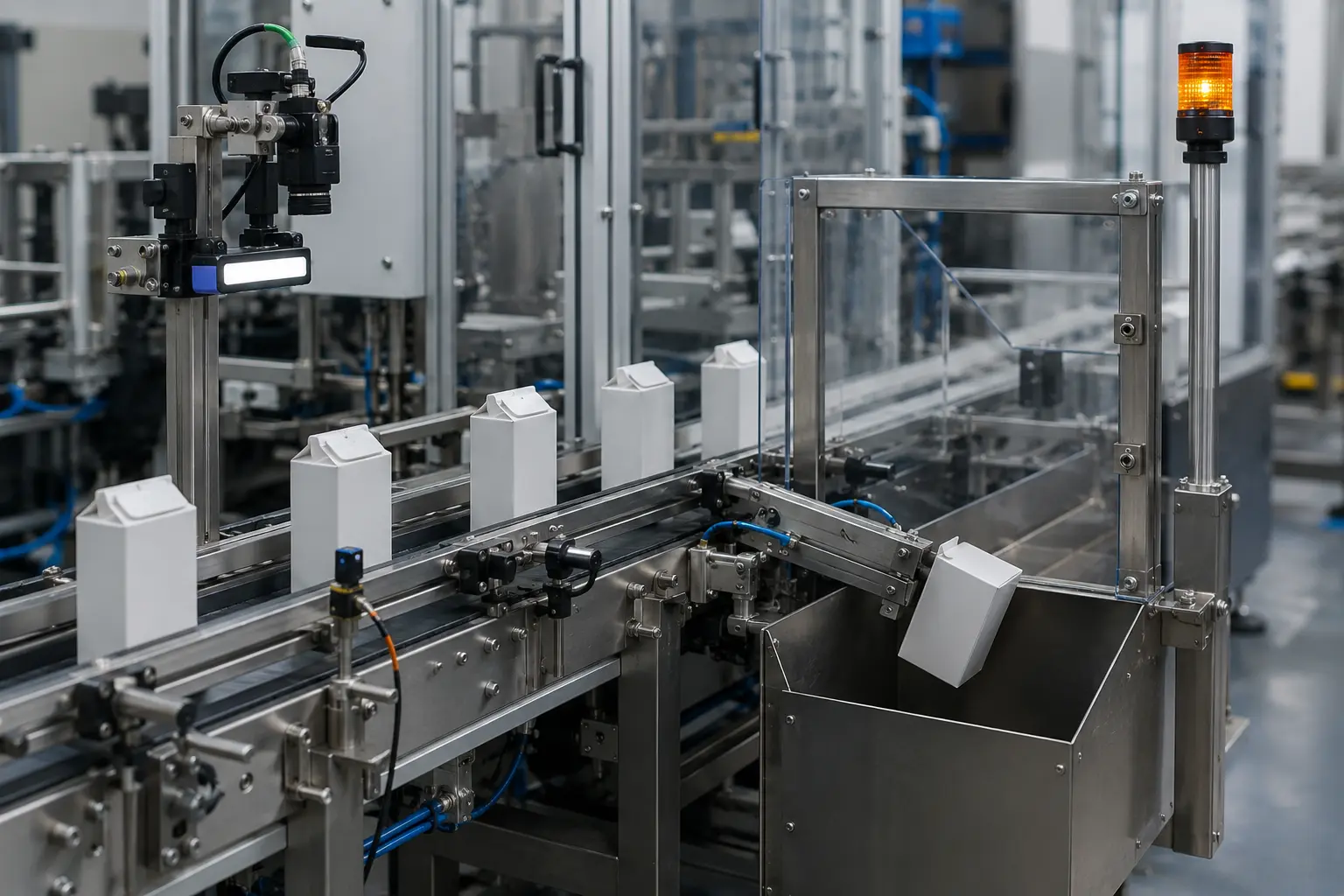
Condensation, changing product colour, moving film and curved containers can all influence the image. We test the full production range and use appropriate lenses, lighting and guides to create a stable inspection window.
Combine the inspection with complementary print, data or reject checks where they reduce the risk of a non-conforming pack reaching the customer.
Every inspection begins with real samples, representative print and the operating conditions found on your production line.
Yes, where the camera position and field of view can cover the full range. Recipes can change inspection regions and parameters; mechanical or camera adjustment may be required for large format differences.
The effect depends on droplet severity and the code position. Lighting, enclosure air management and moving the inspection point may help, but representative wet products must be trialled.
Yes. The reject method is selected and tested around the product mass, stability, sealing and line speed. A powered diverter or pusher may be used where air rejection is unsuitable.
We want to see the real gloss, condensation, curvature and print variation—not an idealised sample. That is how a dependable system starts.