Optical complexity
Field of view, smallest character, number of faces, lighting and substrate determine camera and lens scope.
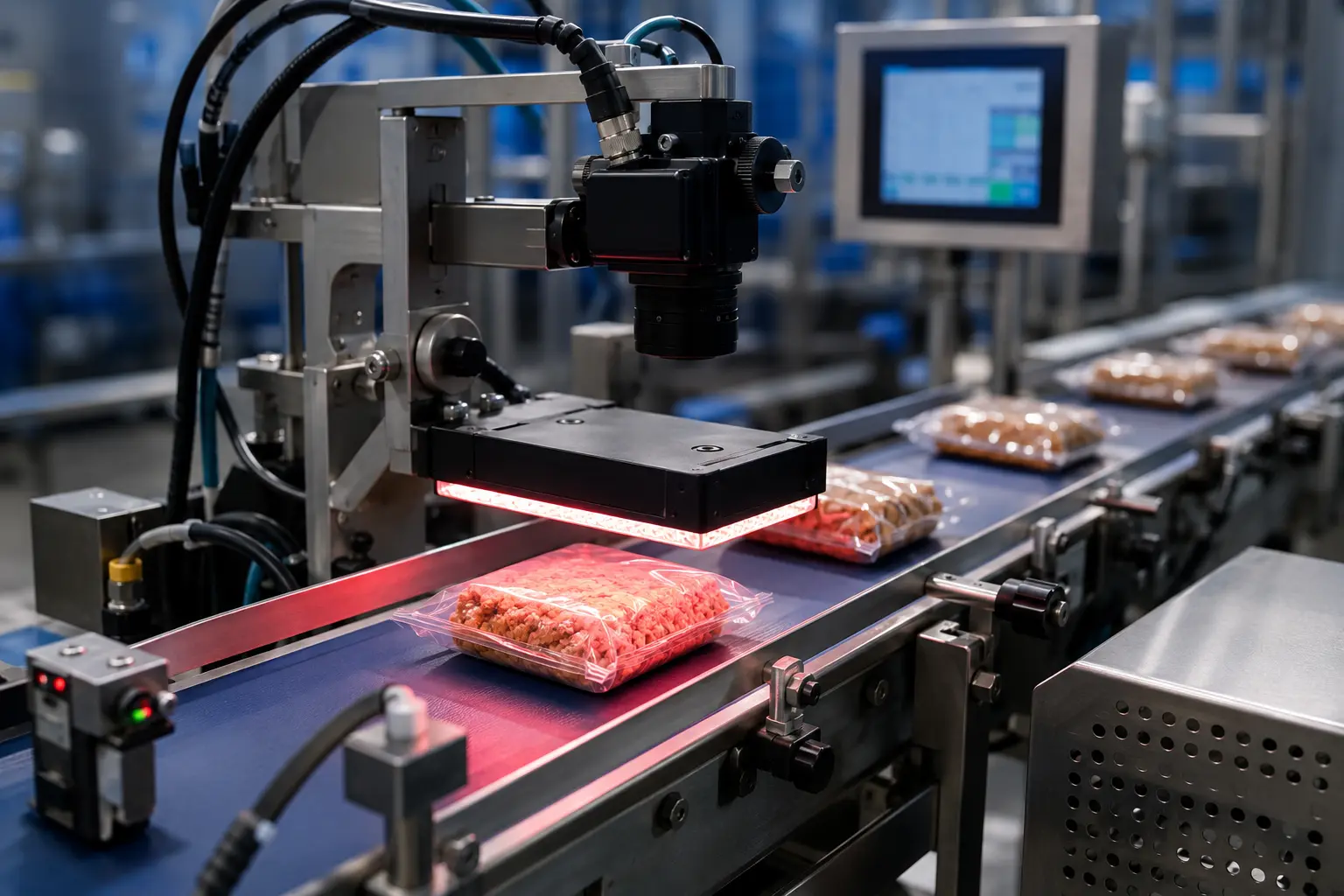
A practical guide to the equipment, integration and production risks that shape a date code inspection quotation—so competing proposals can be compared on the same scope.
There is no reliable single price without the application details. Cost is driven by the number of code faces, required image resolution, product handling, line speed, controls and data integration, reject hardware, environmental protection, validation, installation and training.
The most useful first budget is a defined scope: what must be checked, on which products, at what speed, with what response and what evidence.
A low-cost camera cannot compensate for unstable packs, uncontrolled glare or an unsuitable reject point. Quotations should make clear who supplies product handling, guarding, controls, software, data exchange, rejection, commissioning, documentation and production support.
Field of view, smallest character, number of faces, lighting and substrate determine camera and lens scope.
Frames, conveyors, guides, encoders, guarding and environmental protection can be material parts of the project.
Job selection, PLC interfaces, database or MES links, user access and records affect software engineering.
Line stop, simple reject, tracked reject, confirmation, full-bin monitoring and secure access have different scopes.
Clear answers prevent a minimal camera-only quote being compared with a complete production-ready inspection station.
State whether the system checks presence, print quality, date logic, OCR text, OCV match, barcodes or a combination.
Provide product range, code location, maximum speed, available space, controls and environmental requirements.
Specify stop or reject behaviour, confirmation, data retention, validation, training and support expectations.
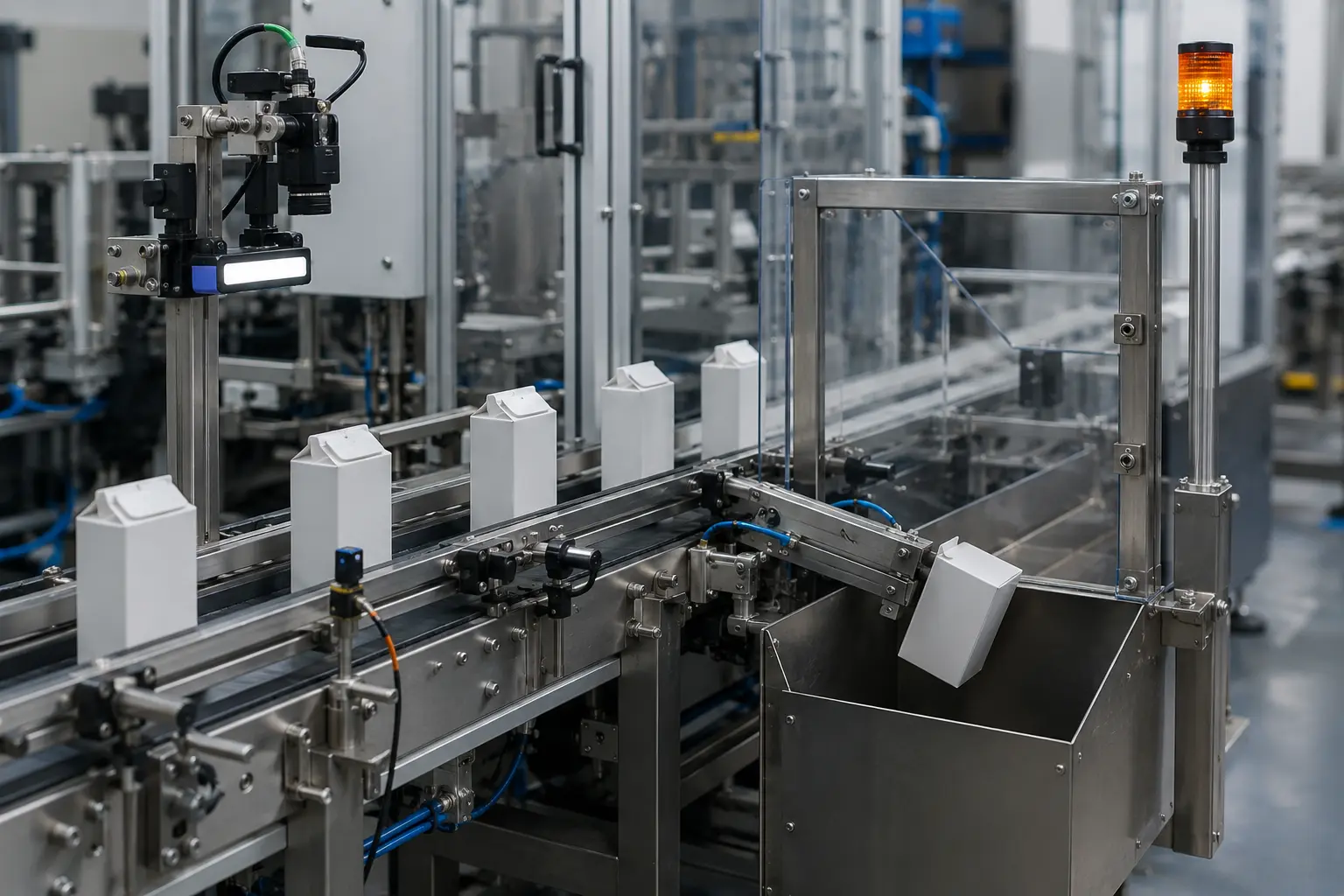
The cheapest initial proposal can be expensive if important production tasks are excluded. Ask each supplier to demonstrate the complete product range and explain the conditions under which the quoted inspection and false-reject performance will be achieved.
Use these related pages to define the character method, physical print check and failed-product response.
Answers are based on typical industrial machine-vision projects; final performance and scope follow representative trials and the measured line conditions.
An initial budget may be possible from product images, code samples, speed, layout and a clear functional description. A measured survey and representative trials are normally needed before the final installed scope is fixed.
Not necessarily. One wide field of view may lack the resolution needed for small characters, while complex mirrors or handling can add risk. The most economical architecture is the one that produces a stable result with maintainable hardware.
Provide the product and code range, smallest characters, line speed, code location, printer type, expected-value source, available footprint, controls platform, reject requirement and any validation or records requirement.
Often, but expansion is easier when future code faces, products, data links and reject capacity are considered in the original hardware and controls design. State likely future requirements during scoping.
Send product images, code samples, speed, layout and the required failure response. We will identify the remaining questions and prepare a practical quotation route.