Missing character detection
Identify incomplete strings, absent date fields and characters lost through nozzle failure.
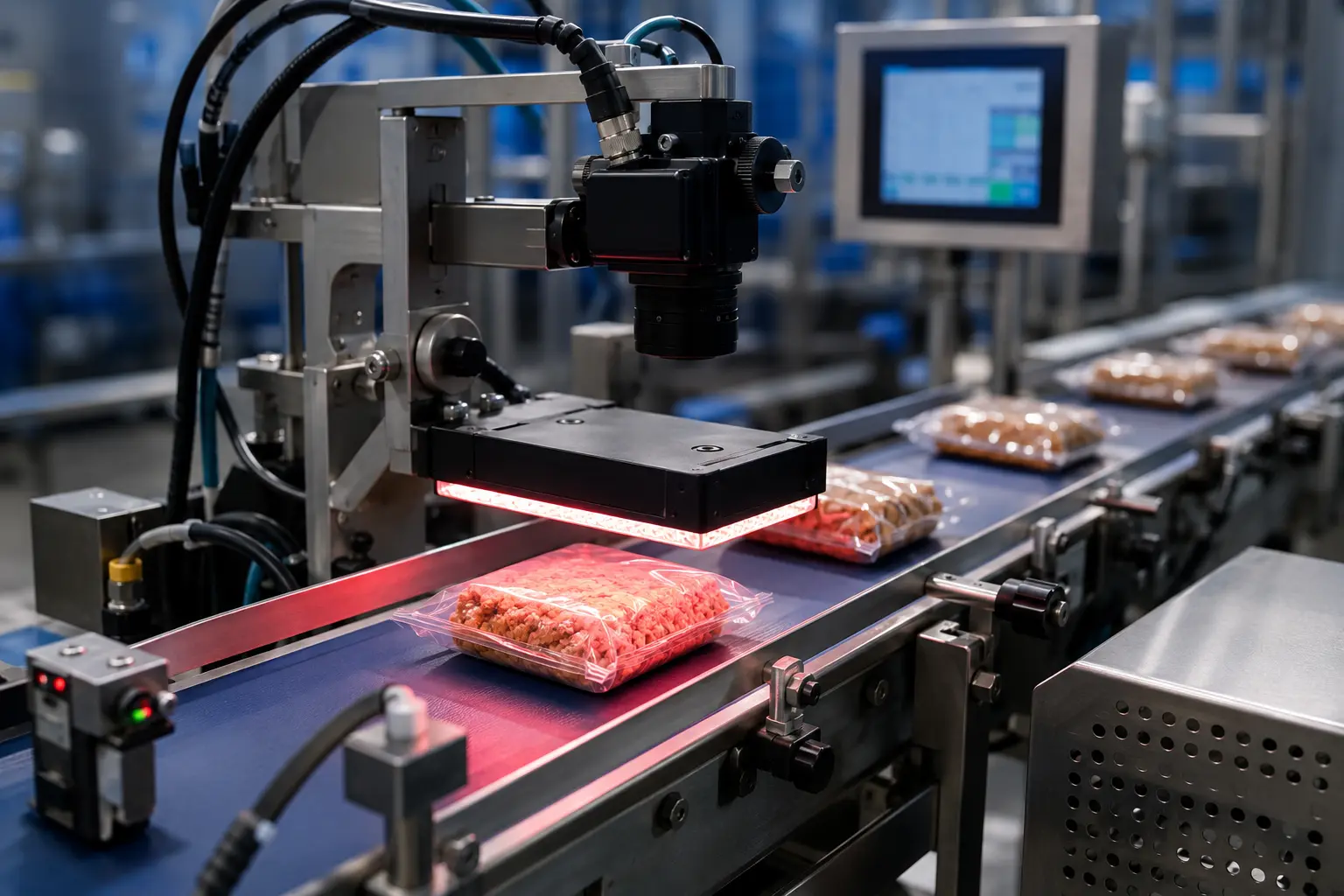
Inspect continuous-inkjet and other variable inkjet print for presence, content, contrast and character integrity at normal production speed.
Inkjet characters change as nozzles block, print heads move, substrates become wet or product presentation drifts. A well-designed inspection system establishes a reliable acceptance window without creating excessive false rejects.
Identify incomplete strings, absent date fields and characters lost through nozzle failure.
Detect excess ink or product motion that joins characters and reduces readability.
Evaluate whether the code can be reliably distinguished from the pack background.
Confirm the printed message remains within the permitted area of the product or label.
Continuous inspection shows when code quality drifts, allowing production teams to intervene before a large quantity of finished product requires rework.
Flag incomplete character strokes and recurring print defects as they appear.
Apply the inspection to every printed product while maintaining normal line flow.
Control legibility as well as the exact date, batch or lot content.
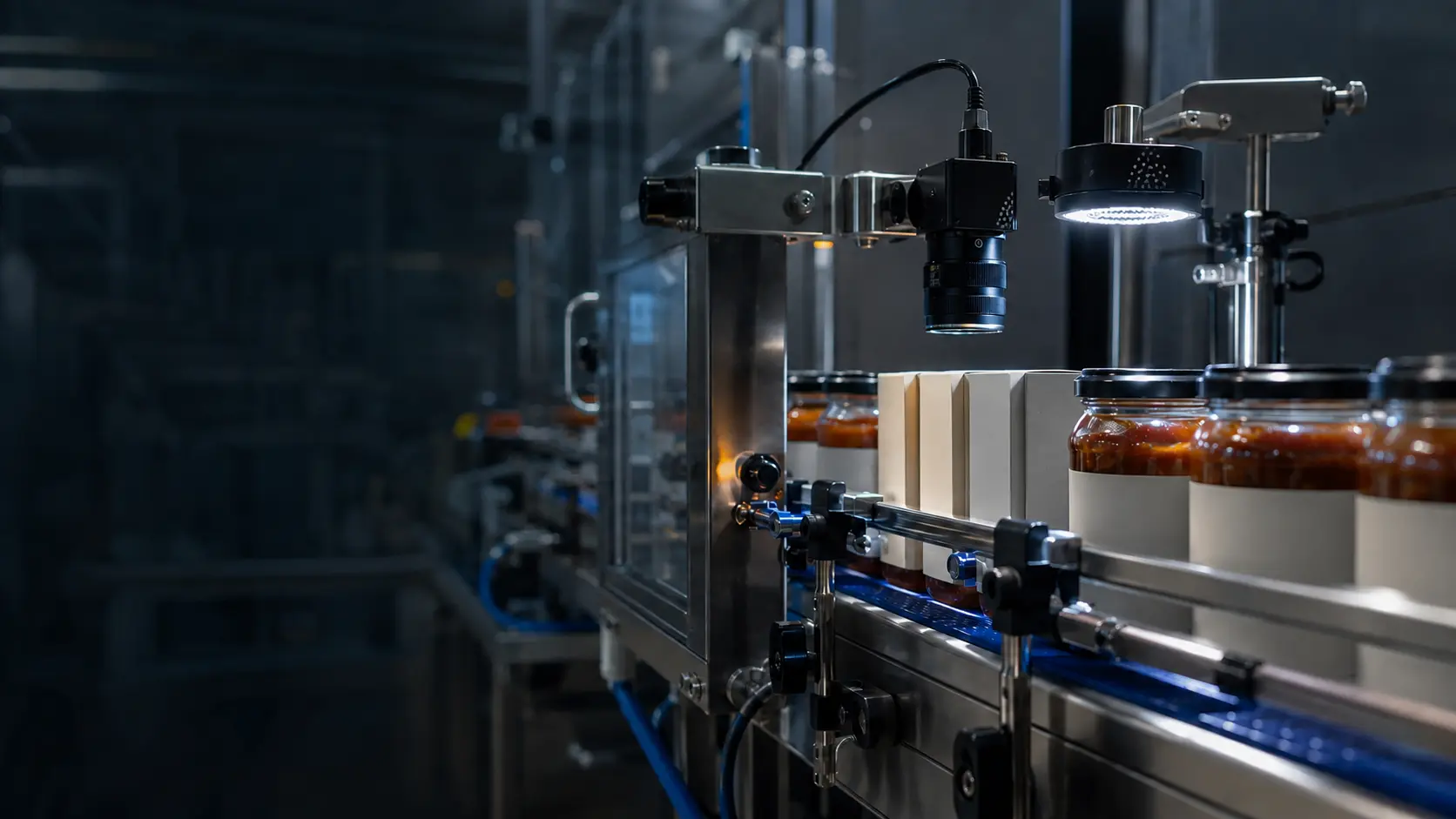
Dark print on a light carton is different from pale ink on curved, glossy or patterned packaging. We choose illumination and optics that maximise repeatable code contrast and use product handling to keep the code within view.
Combine the inspection with complementary print, data or reject checks where they reduce the risk of a non-conforming pack reaching the customer.
Every inspection begins with real samples, representative print and the operating conditions found on your production line.
It can detect the resulting loss of character structure when the image resolution and acceptance criteria are sufficient. The practical threshold is established using deliberately degraded print samples.
Yes, in many applications. The illumination wavelength, angle and exposure are selected to create stable contrast between the light ink and background.
The inspection tolerance is configured around representative good print and known failures. Stable product presentation and controlled lighting are important for maintaining a robust acceptance window.
Send good, marginal and failed samples from the real line. We will assess the code, substrate, product motion and inspection tolerance.