Character completeness
Detect missing dots, blocked nozzles, broken strokes and clipped parts of the message.
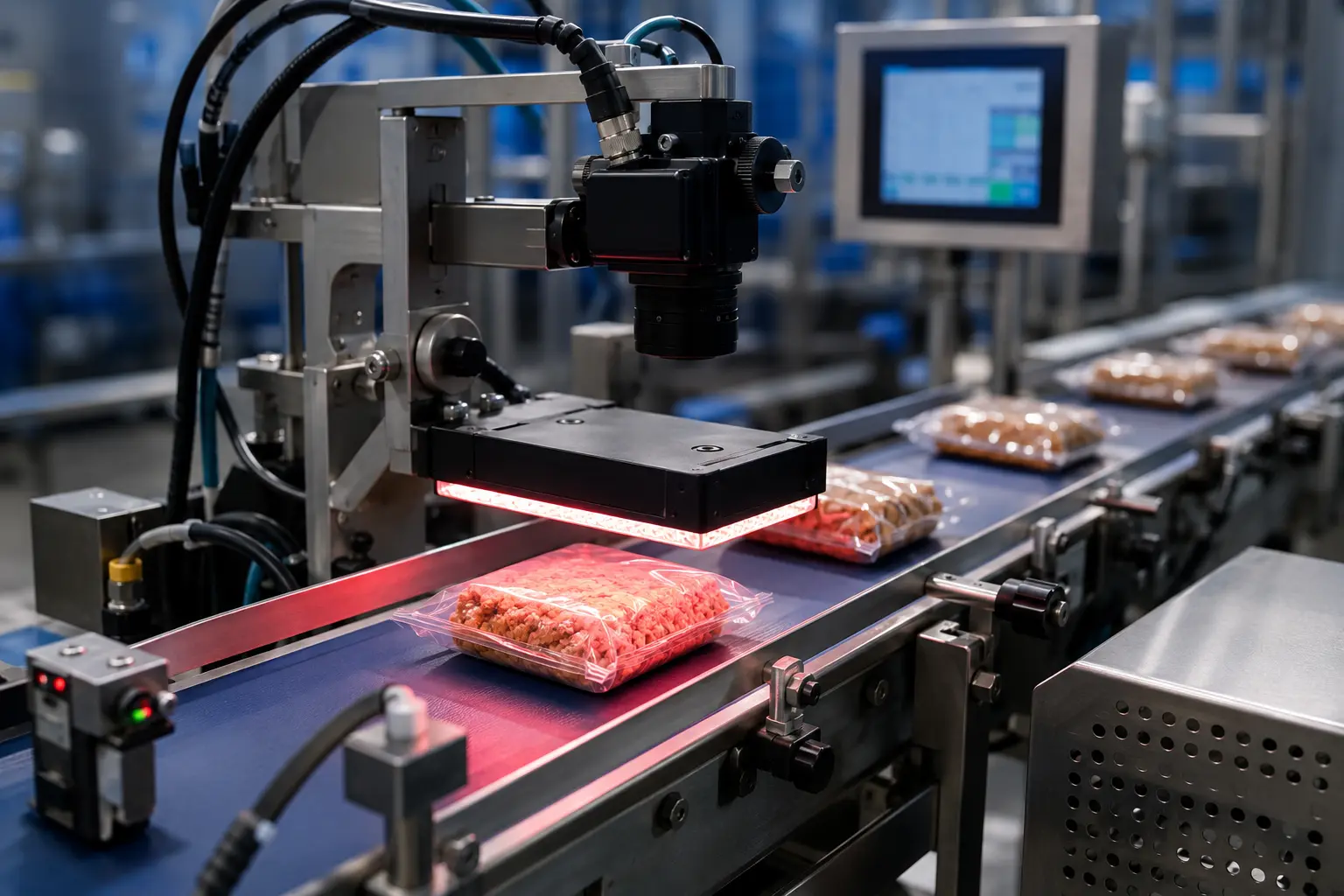
Find weak, incomplete, smudged, doubled or displaced code print before it becomes unreadable—and separate print-quality faults from incorrect-code faults.
Date code print quality inspection assesses whether the physical characters are complete, sufficiently contrasted, correctly positioned and reliably readable. It can detect missing dots, broken strokes, blur, smear, overprint, weak contrast and print outside the permitted area.
Print quality inspection answers “is this code readable?” Content verification answers “is this the right code?” Many applications need both checks.
Human judgement of a marginal code varies by operator and shift. A vision system applies repeatable limits to each pack, while controlled trials establish the difference between acceptable natural print variation and a code likely to fail downstream or with the consumer.
Detect missing dots, blocked nozzles, broken strokes and clipped parts of the message.
Fail codes that are too faint, blurred, doubled or smeared for reliable recognition.
Confirm the code remains inside the allowed area and is not printed across a seal or edge.
Combine quality checks with OCR or OCV when the captured characters must also be correct.
Lighting, exposure and pass/fail tolerances are tested against the real failure modes produced by the printer and substrate.
Control product presentation, focus, exposure and illumination so process variation is visible.
Evaluate presence, location, character features, contrast and recognition confidence.
Reject the pack, alarm the operator or trend deterioration before a large batch is affected.
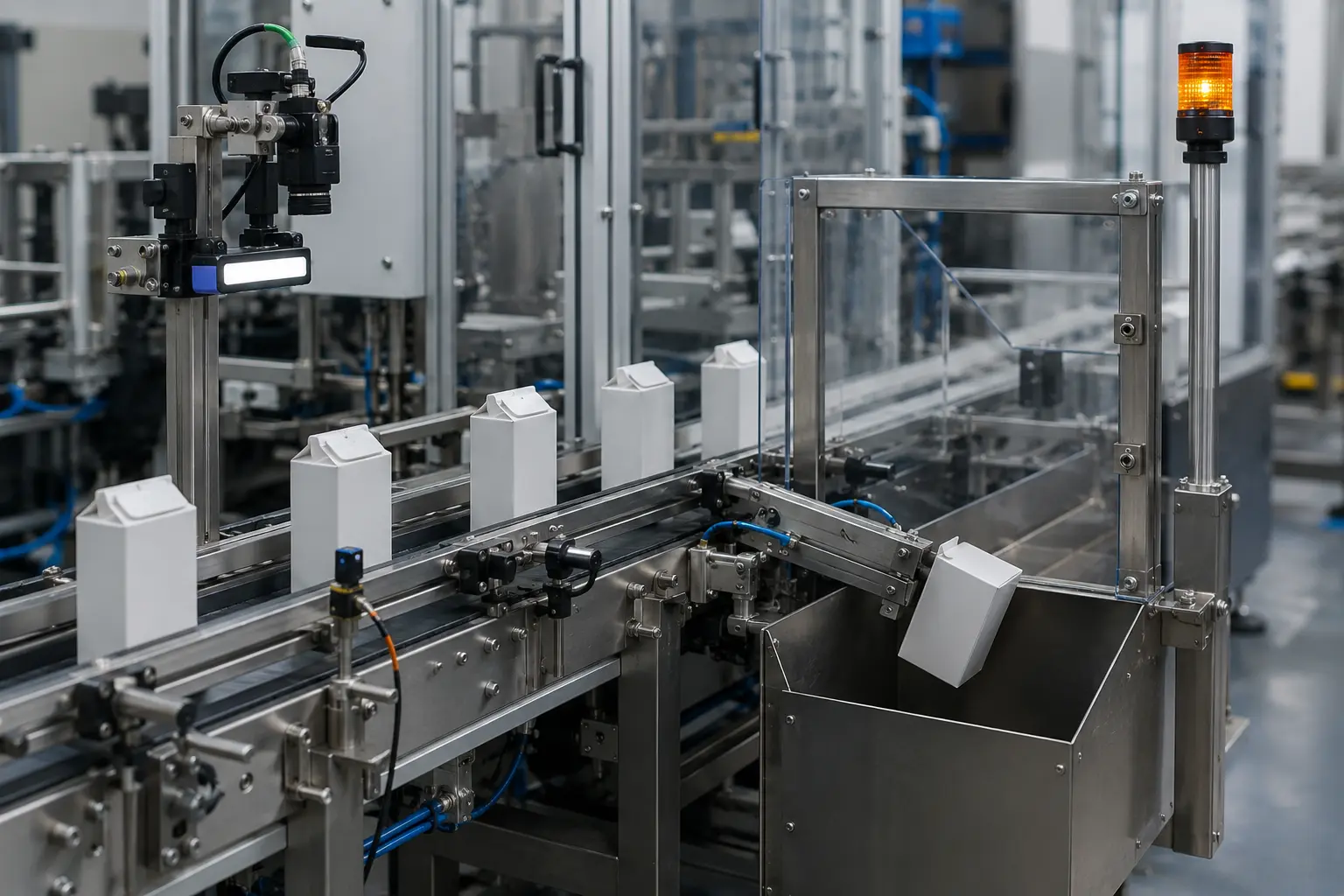
Inkjet, laser and thermal-transfer systems produce different signatures when performance drifts. The inspection should target the practical defect set rather than relying on a single generic score that hides the reason for failure.
Use these related pages to define the character method, physical print check and failed-product response.
Answers are based on typical industrial machine-vision projects; final performance and scope follow representative trials and the measured line conditions.
No. OCR identifies the characters that are present. Print quality tools assess the physical condition of the code. OCR confidence may contribute to a quality decision, but dedicated checks can identify why print is failing.
Yes. Measurements or confidence values can be trended and warning limits applied before the hard reject threshold, subject to the line-control and reporting design.
The acceptance window is developed from representative good, marginal and failed samples agreed with the production and quality teams. Limits are then challenged across products, speeds and normal environmental variation.
Yes. The system can verify that the code is inside an allowed region, at a permitted angle and clear of seals, folds, edges or other graphics.
Send examples from normal production and the defects you need to catch. We will assess optics, resolution and practical inspection limits.