Presence
Confirm that a code exists inside the permitted print area on every inspected product.
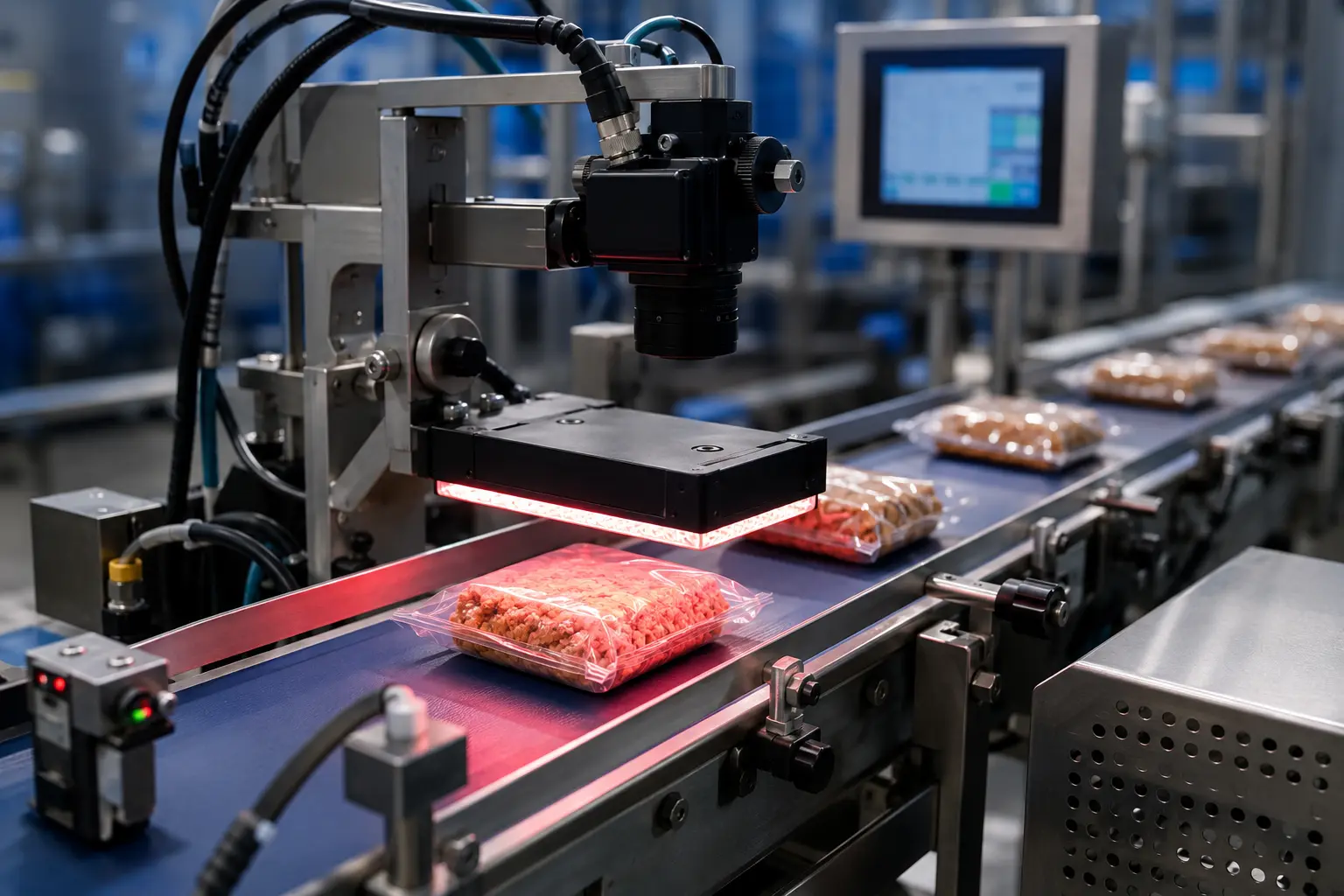
Verify that each printed date, batch or lot code is present, readable and correct for the active production job—then remove non-conforming packs automatically.
A date code verification system captures an image of every pack, reads or compares the printed code with OCR or OCV, checks it against the value expected for the active job and returns a pass or fail result. A failed pack can be tracked to an automatic reject device or the line can be stopped.
The important distinction is that code presence, print quality and code correctness are separate checks. A complete system can combine all three.
Printer control reduces manual data-entry risk, but it does not prove that the correct code reached the pack. In-line vision checks the physical result at production speed and can compare it with a recipe, PLC value, database record or calculated shelf-life rule.
Confirm that a code exists inside the permitted print area on every inspected product.
Detect incomplete, low-contrast, blurred, doubled or otherwise unreliable characters.
Compare the captured date, batch or lot string with the value authorised for the current run.
Stop the process or track a failed pack to a reject device with optional reject confirmation.
The inspection logic is linked to product handling and line controls so the result remains associated with the correct pack.
Receive or select the expected code, date rule, product format and inspection tolerances.
Trigger a controlled image, locate the print and apply OCR, OCV and quality checks.
Return pass/fail, remove the correct product and retain the required result or image data.
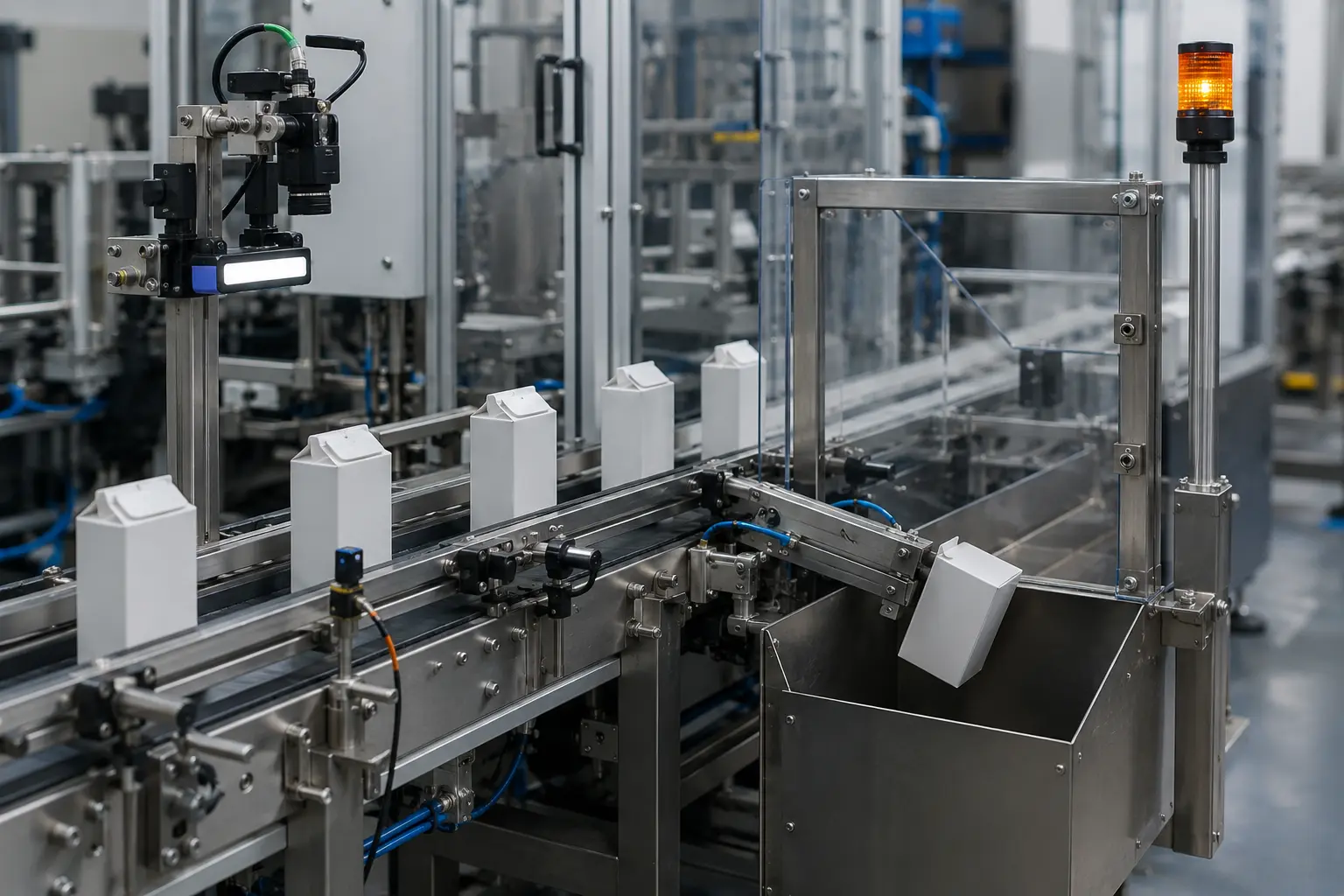
Reliable verification begins with representative good and bad samples. We assess the smallest critical character, worst acceptable print, pack movement, surface reflectivity, code position and maximum line speed before fixing thresholds.
Use these related pages to define the character method, physical print check and failed-product response.
Answers are based on typical industrial machine-vision projects; final performance and scope follow representative trials and the measured line conditions.
Inspection is the broad process of checking the physical code. Verification specifically confirms that the captured content matches an expected value. A system can also check presence, position and print quality in the same image.
Yes. Where the production rules are defined, the expected date can be calculated from the production date and shelf-life value or supplied by a recipe, PLC, MES, ERP or other authorised data source.
Often, yes. If the complete message is visible at suitable resolution, the same image can check the date, batch or lot string, permitted format, print position and overall readability.
A no-read can be treated as a fail. The line can stop or the product can be tracked to a reject point, with confirmation and alarm logic added where required.
Send representative packs, approved code formats, known failures and line details. We will outline the camera, data and reject approach for the application.