Variable print inspection systems
Catch weak, broken and displaced codes at production speed
Inspect code presence, position, contrast and character integrity on every presented product—then reject print that cannot meet your programmed standard.
Quick answer
Print verificationNo printBlank field or missing code Broken charactersMissing dots, strokes or segments Low contrastWeak code against the pack SmudgingCharacters merged or distorted Wrong positionCode outside the permitted area Doubled printOverprint or repeated characters Incomplete stringMissing prefix, date or batch field No-readResult below the confidence threshold
Print-quality inspection separates readable variation from a genuine coding fault
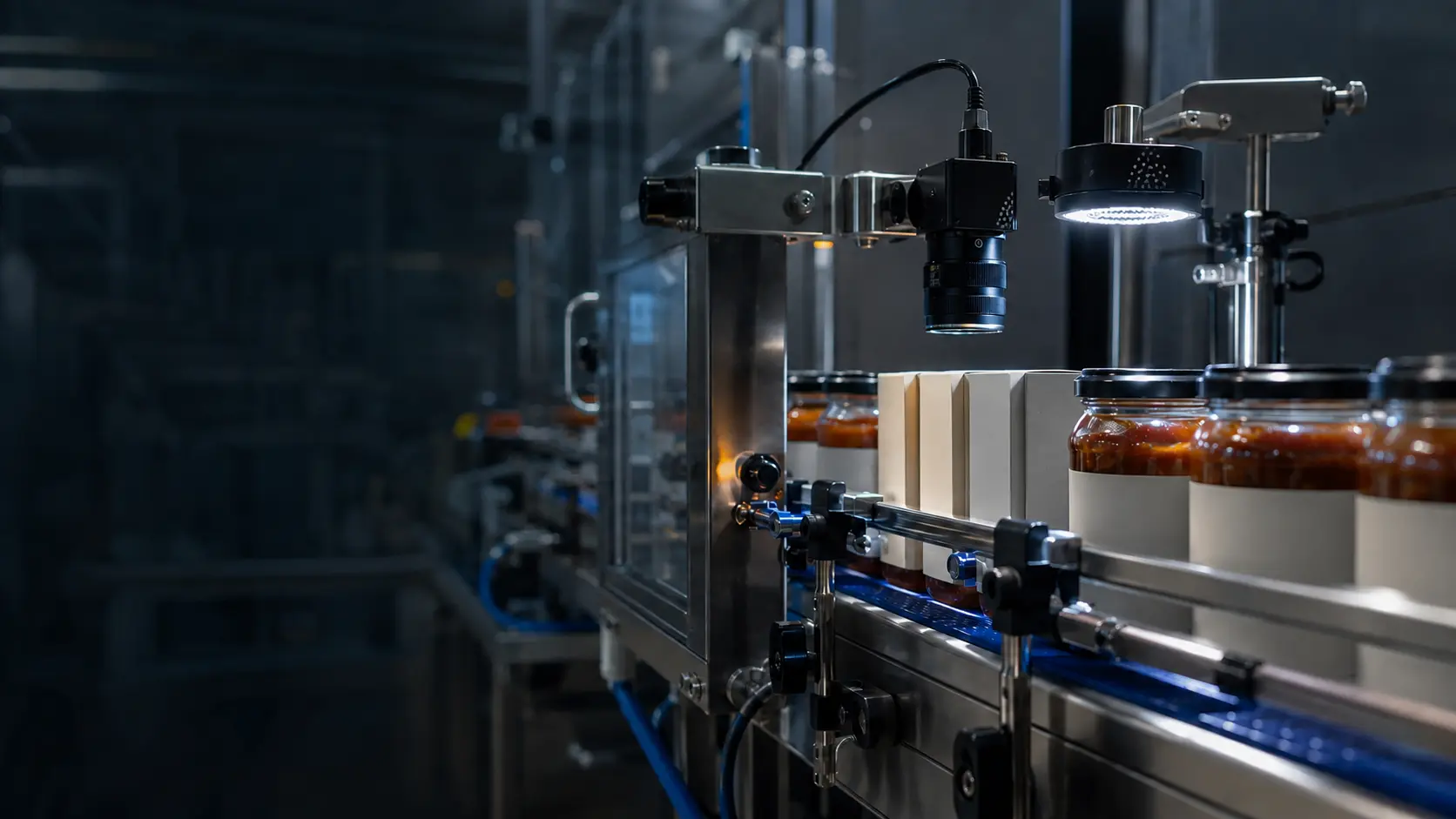
A code can contain the correct value and still be unusable. Controlled lighting and an industrial camera reveal whether the date, batch or lot field has sufficient contrast, complete characters and the correct position. The inspection tolerance is established using representative good print and deliberately poor samples from the real printer and substrate.
Printer and substrate
The optical setup must match how the code is made
Inkjet, laser and thermal-transfer print fail differently. The camera, light and inspection tools are selected around the actual defect modes.
Inkjet print
Detect missing dots, blocked-nozzle effects, spreading, smudging, weak contrast and displaced strings.
Inspect inkjet codes →Laser marking
Reveal low-contrast, shallow or incomplete marks on plastic, glass, foil, board and coated surfaces.
Inspect laser codes →Thermal transfer
Check ribbon-transfer integrity, code position and variable data on flexible film, labels and pouches.
Inspect thermal-transfer print →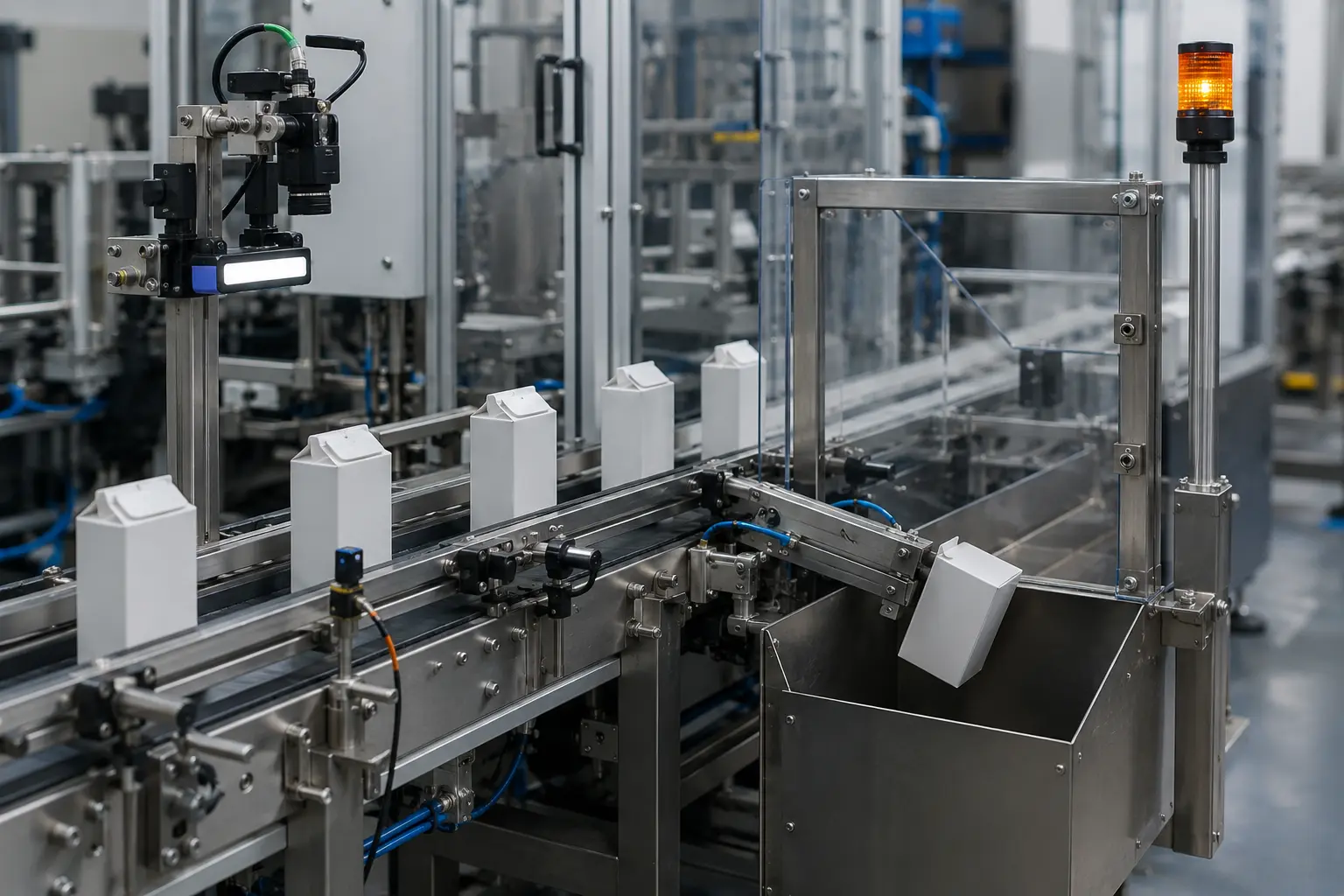
Choose the right decision tool
Presence, quality, OCR and OCV can work together
Presence and integrity tools prove that a code exists and meets visual acceptance limits. OCR reads changing content. OCV compares each printed character with a known expected value. A robust station can combine these checks so that correct content with poor print—or good print with the wrong content—still fails.
- Independent thresholds for position, contrast and integrity
- OCR for changing date, batch or lot strings
- OCV for known values and taught references
- No-read and wrong-read treated as separate failure reasons
- Recipe-controlled tolerances for different products
Frequently asked questions
Variable print inspection questions
Sample trials establish what natural variation can be accepted without letting genuine defects pass.
Can a camera inspect print quality without reading the whole code?
Yes. Presence, position, contrast and character-integrity tools can be used when the requirement is to prove usable print rather than decode every character.
What is the difference between a no-read and a wrong-read?
A no-read means the system could not obtain a reliable result. A wrong-read means it obtained a result that does not match the expected value. Both conditions normally require a controlled fail response.
Can variable print be inspected on reflective or flexible packs?
Usually, subject to a sample trial. The lighting, lens, exposure and product control are selected to manage glare, movement, curvature, film texture and natural print variation.
Does print-quality inspection work with inkjet, laser and thermal transfer?
Yes. Each print method produces different defects, so the inspection tools and acceptance limits are configured for the actual printer, substrate and code format.
Print trial
Send good codes, bad codes and blank packs
We will assess contrast, defect modes, print position and the inspection approach suited to the application.