Variable characters
Handle controlled changes in font shape, dot formation, spacing or character edge quality.
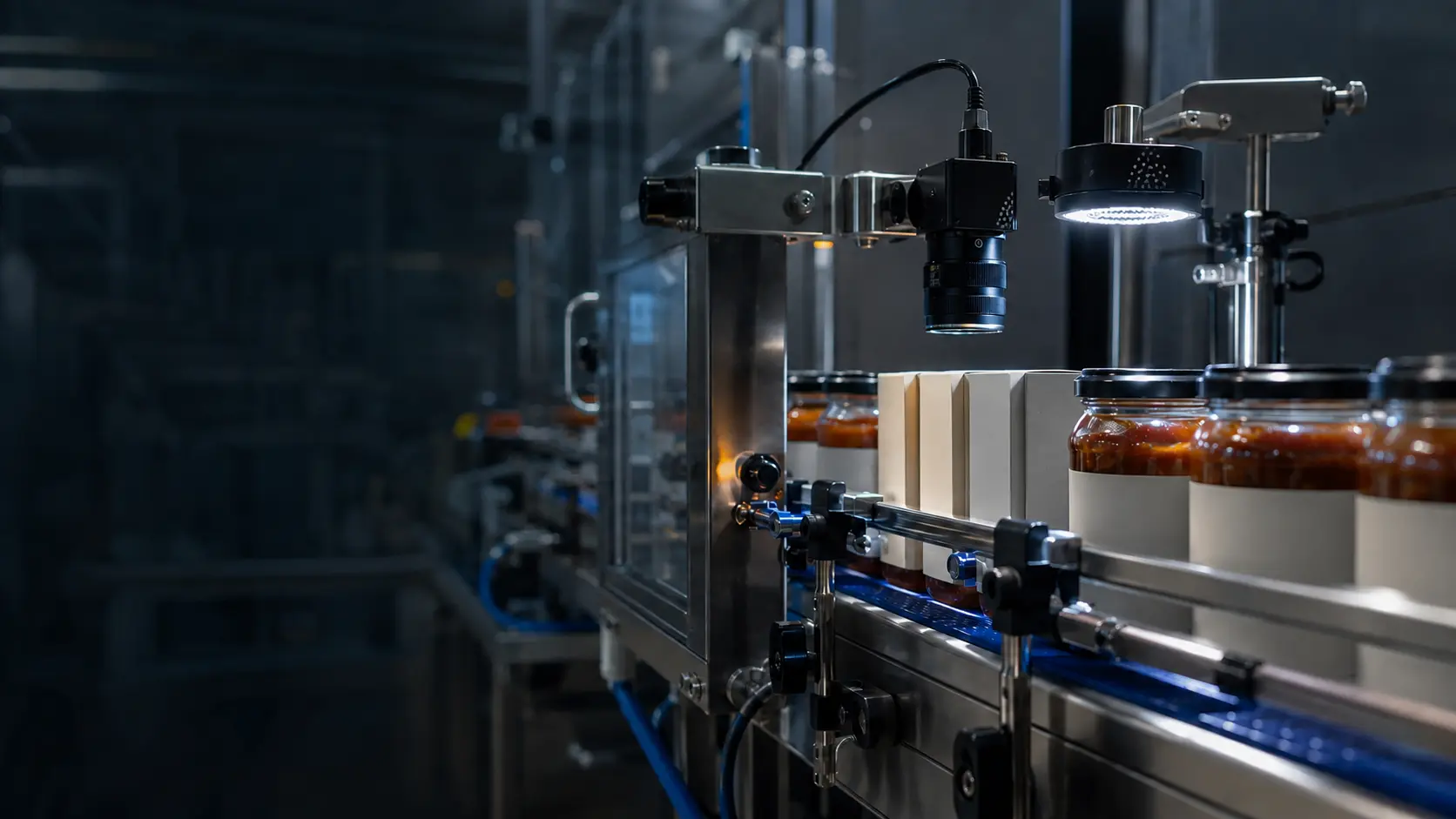
Read difficult date, batch and lot codes with an engineered combination of optics, AI-assisted character recognition, expected-data checks and controlled rejection.
AI OCR uses a trained or pre-trained character model to recognise text that varies in shape, contrast or presentation. It can be useful when conventional OCR needs too much font training or produces unstable reads on naturally variable print.
Recognition alone is not verification. Oxford Vision Systems combines the captured string with a defined expected value, format, date window or production rule, then applies the required reject or line-stop action. Representative trials decide whether AI OCR, conventional OCR, OCV or a simpler presence tool is the right method.
Handle controlled changes in font shape, dot formation, spacing or character edge quality.
Evaluate curved, reflective, textured, flexible or low-contrast packaging under controlled lighting.
Compare recognised dates, batches and lots with the active recipe or production record.
Separate no-read, wrong value, print-quality and system-fault conditions for operators.
AI is one inspection tool, not a substitute for product presentation, lighting, optics or a properly defined source of truth.
Best where changing strings are clear, controlled and readable with a stable character model.
Best where the expected value is known and the task is to confirm its printed appearance.
Consider where acceptable characters vary too widely for a stable conventional OCR configuration.
The selection is based on fault detection, false-reject behaviour, maintainability and how easily operators can understand the result.
| Method | Best suited to | Key validation question |
|---|---|---|
| Presence / blob tools | Confirming that print exists in a controlled region | Could an incorrect but present code still pass? |
| OCV | Known strings and taught references | Does normal print variation remain inside a safe tolerance? |
| Conventional OCR | Readable variable text with controlled fonts | Are all expected fonts and formats represented? |
| AI-assisted OCR | Broader but still bounded appearance variation | Do challenge samples prove both reads and rejects? |
| Barcode / 2D reading | Machine-readable encoded data | Is the content validated against the active job? |
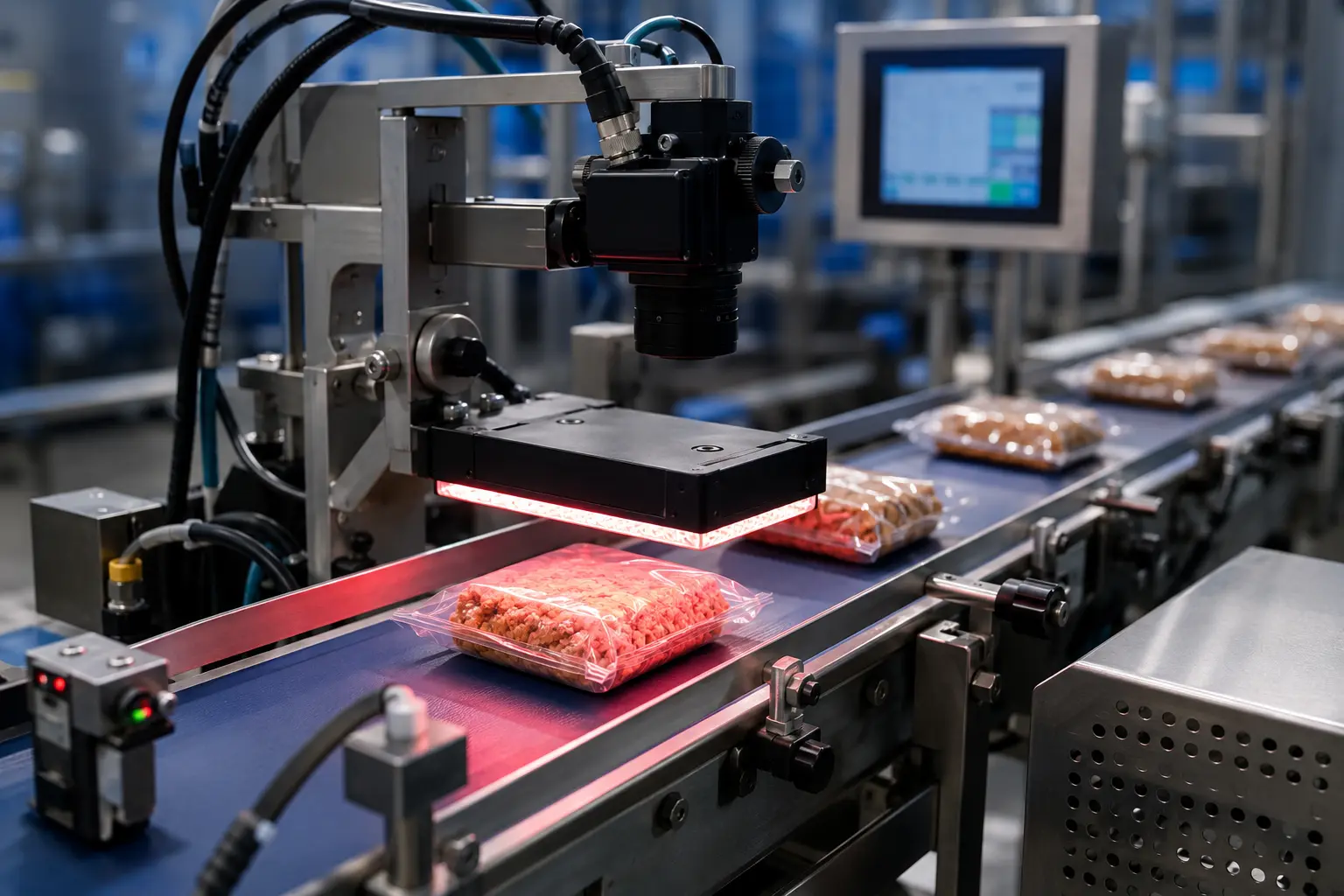
A credible AI OCR trial includes acceptable natural variation and deliberate faults: missing characters, merged dots, weak contrast, smearing, glare, displacement and wrong content. We assess no-read and false-accept risk rather than quoting a generic accuracy figure that may not apply to your packs.
The final scope defines how models or recipes are controlled, what happens when confidence is insufficient, how expected data is supplied and which evidence is retained. Where production data must stay on site, the proposed architecture can be evaluated around local processing requirements.
Use the related pages to define the recognition method, source of expected data and physical line response.
Final performance is established with representative products, deliberate faults and the operating conditions found on your production line.
No. Conventional OCR or OCV may be simpler, easier to maintain and fully adequate for controlled print. AI-assisted OCR is considered when representative variation cannot be handled reliably by the simpler method.
AI OCR recognises the characters. A separate validation rule compares the recognised value with the current recipe, permitted format, calculated date window, PLC or database value.
We use representative good products and deliberate challenge samples. The trial checks character reading, meaningful defect rejection, false rejects and behaviour when the result is uncertain.
Some industrial architectures support local processing. The final design depends on the selected hardware and software, required integrations, data policy and support model, so this is confirmed during specification.
Send clear photographs, normal print variation, known failures, code formats and line speed. We will recommend the most maintainable inspection route.