Product presentation
Guides, spacing and trigger position keep the code inside the camera field of view.
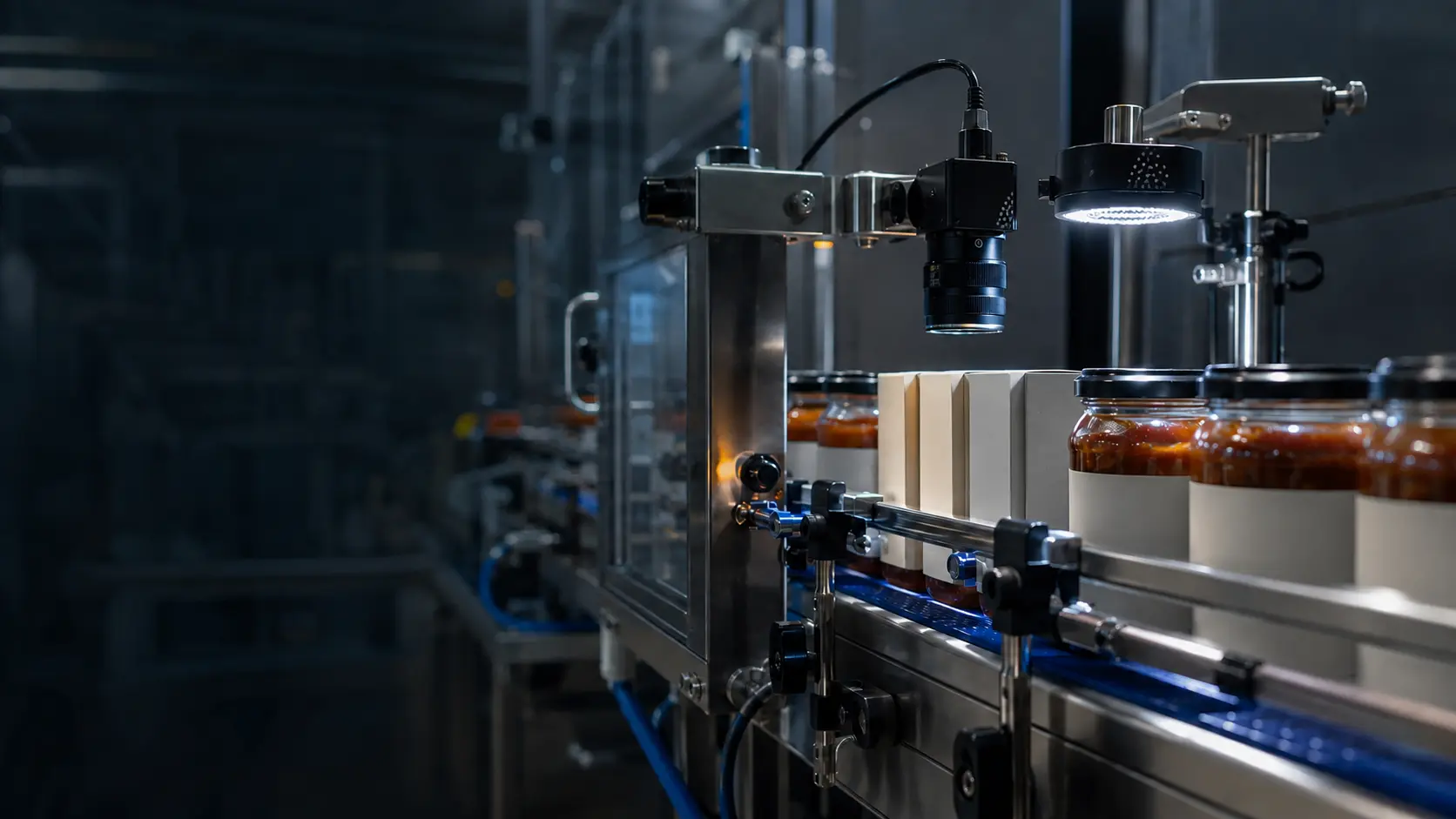
Add camera-based date, batch, lot and print verification to an existing conveyor, packaging machine or inspection station.
A retrofit can use the existing printer and conveyor when each product can be presented consistently, the complete code is visible at suitable resolution and there is enough distance to track a failure to the chosen reject point. Where the existing line cannot provide those conditions, a compact standalone conveyor module or guarded inspection frame can create a controlled zone.
Guides, spacing and trigger position keep the code inside the camera field of view.
Rigid camera, lens and lighting mounts protect focus and image consistency.
Exchange recipe, expected value, pass/fail, fault and line-stop signals as required.
Maintain product identity from inspection trigger to confirmed failed-pack removal.
Dimensions and production samples allow early risks to be identified before detailed design.
Confirm code face, position tolerance, pack rotation and whether a top, side or underside view is required.
Check conveyor speed, vibration, product movement, trigger repeatability and available lighting space.
Agree manual recipe selection or data exchange with the printer, PLC, MES or production database.
Select air blast, pusher, drop flap, divert conveyor or line stop according to product and risk.
Provide safe access, maintenance space and integration with existing machinery controls.
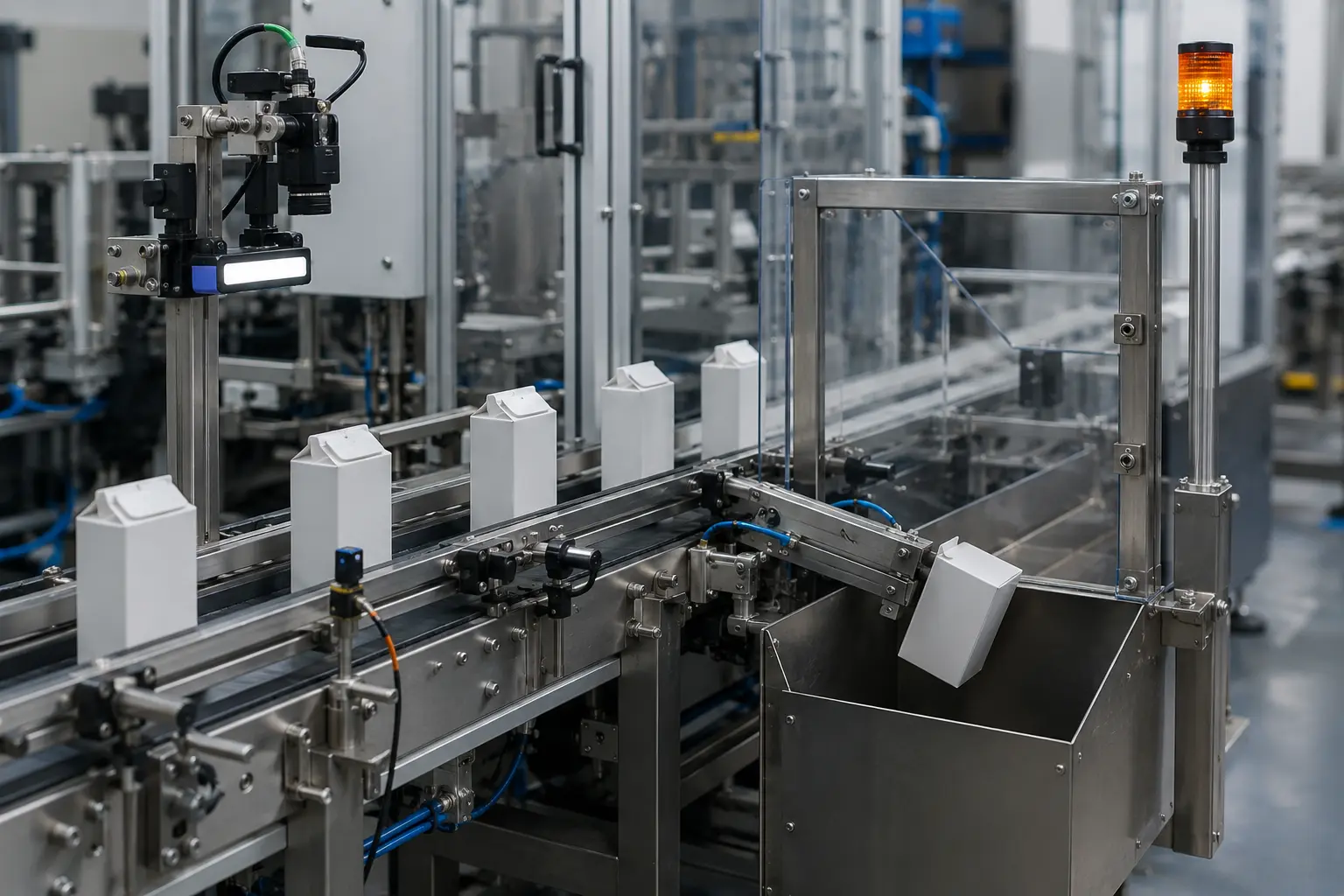
The inspection result must stay associated with the correct product until the final action is complete. Encoder tracking, product sensors, reject confirmation and full-bin monitoring may be needed where variable spacing or higher line risk makes simple timed rejection unsuitable.
The work is staged around the installation window and the evidence required for acceptance.
Review samples, code rules, line dimensions, speed, controls and reject risk.
Prove image quality and inspection logic using representative good and bad products.
Complete mounting, guarding, controls, product tracking and operator recipe design.
Test pass, no-read, wrong-read, reject confirmation, faults and changeover procedures.
A dimensioned line drawing and short production video are useful when an immediate site survey is not practical.
Often, yes. The survey checks whether products can be presented consistently, whether the code is visible, where triggering and lighting can be mounted and whether there is enough distance for reliable reject tracking.
Not normally. A vision system can inspect output from an existing inkjet, laser or thermal-transfer printer. Printer communication is optional when the project only needs independent verification.
It depends on product speed, spacing, the camera field of view, guarding and the chosen reject method. A site survey or dimensioned line drawing is used to establish the practical footprint.
Yes. Typical signals include product trigger, recipe or expected value, pass/fail status, reject actuation, fault, line stop and counters. The exact interface is agreed with the controls owner.
We will assess the likely inspection point, mechanical footprint, controls interface and failed-pack response.
An inspection camera can confirm that a printed code matches the supplied reference without knowing that the reference itself is wrong. If the printer and camera both receive an incorrectly selected job, a perfect match may still belong to the wrong product or production date. Define the authority for the expected value as part of the retrofit brief.
Separate reading quality from the business rule. Reading establishes the characters that are visible; comparison establishes whether they match an expected string; a production rule establishes which string is appropriate for the current order. Record where product identity, date calculations and batch data are approved, and how an operator change or upstream update reaches the inspection station.
During commissioning, include a valid-looking code from the wrong job as well as damaged or missing print. Review date rollover, planned product changes and recovery after a disconnected data source where they apply to the line. The objective is a clear acceptance test for wrong-data faults, alongside optical performance. Send example code formats and the current method of selecting printer jobs when asking for a retrofit assessment.
Yes if it is compared with an incorrect expected value. Date ownership and production matching rules need to be defined.
A readable code from the wrong product or job, with a known expected result, tests data matching separately from print readability.
Understand expected-text verification Plan batch-code matching